Press Brake Tooling: What's Standard, What's Not, and What Tolerances to Expect in India
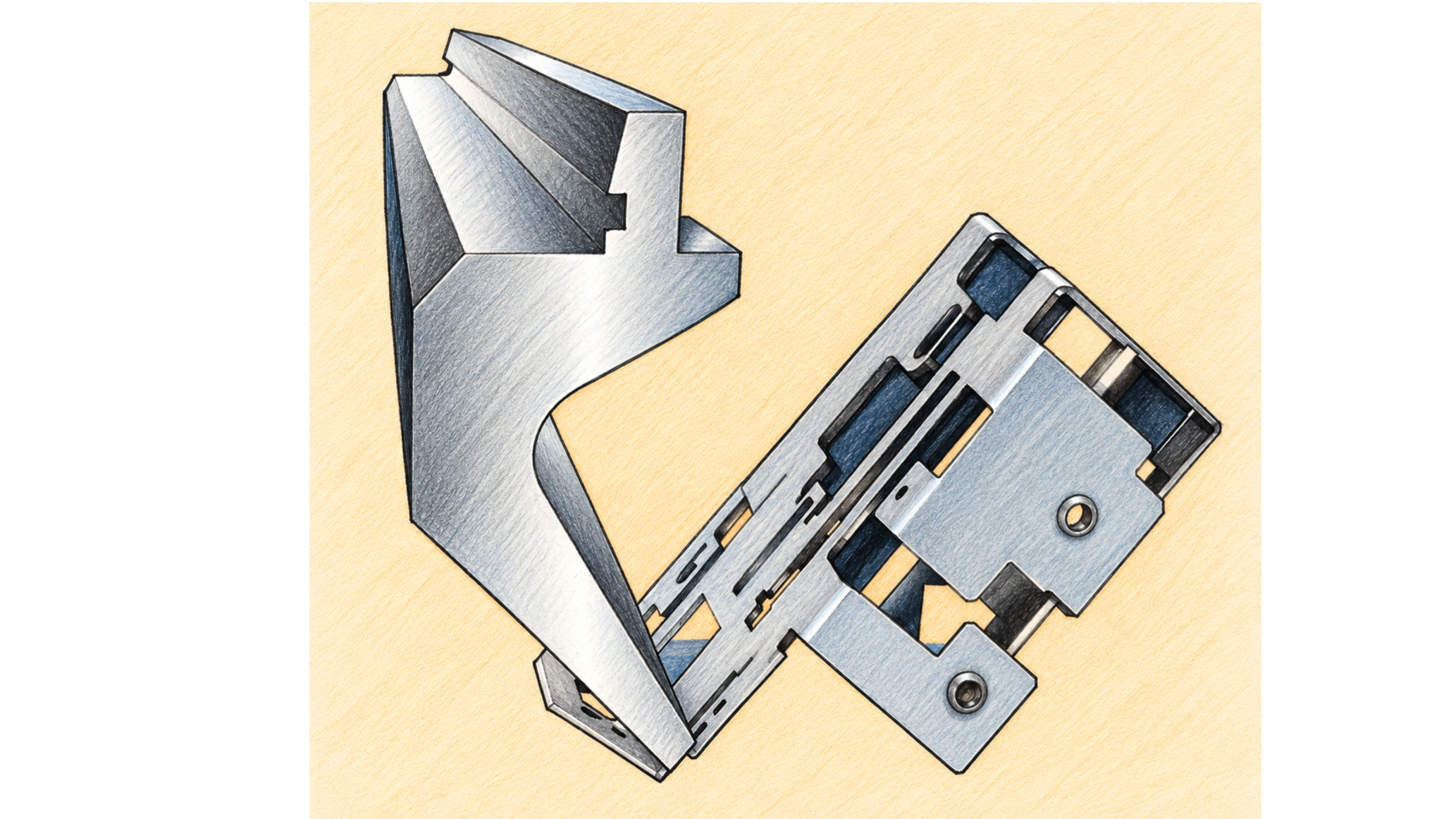
Most bending problems start in the CAD file, not on the shop floor. Here is how standard press brake tooling works, how to design parts around it, what tolerances to expect in India, and when a bend tips over into "special."
Most of the bending problems we see during quote reviews don't start on the shop floor. They start in the CAD file, when someone draws a flange that looks perfectly reasonable on screen but can't actually be formed with the tools the press brake has. Tooling is the quiet constraint behind almost every bend, and it's worth understanding before you send a drawing out for pricing.
This post covers what "standard tooling" means, how to design parts that run on it, what tolerances to realistically expect from Indian job shops, and where the line sits between a normal bend and a special one.
The two halves of the tool
A press brake bends sheet between two tools. The punch is the upper tool that moves down. It sets the inside radius and, along with the die, the bend angle. The die is the lower tool that sits in the bed. Its V-opening largely decides the inside radius you can get and how much tonnage the machine needs.
Almost everything else (hold-downs, gooseneck clearance, segmented beds) exists to support those two pieces doing their job.
What "standard tooling" actually means

Standard tooling is what nearly every job shop in India already has on the shelf. In practice it looks like this:
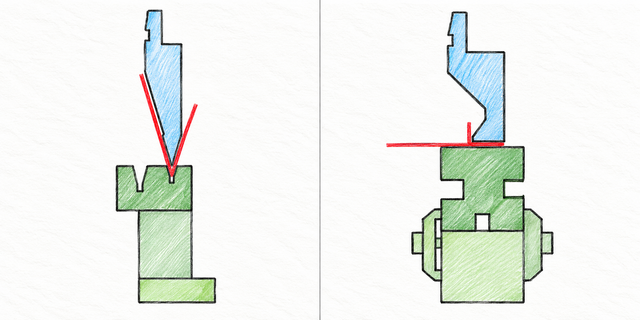
- Straight punches in 86° or 88° for most general work, with a 30° acute punch for tighter angles.
- Sash punches, Gooseneck in 86° or 88° is also commonly used in Indian machine shops.
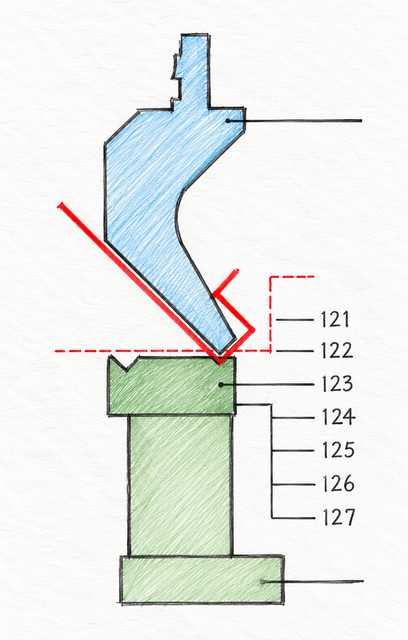
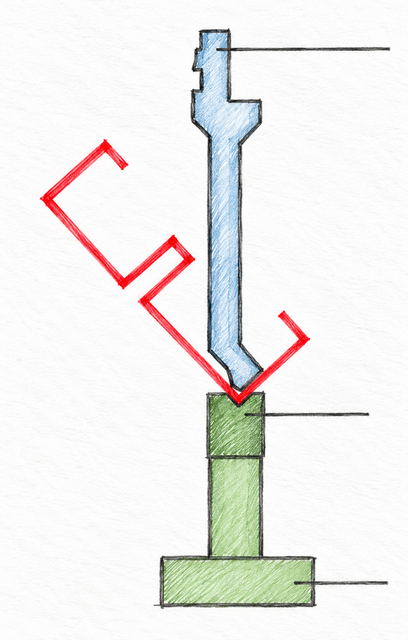
- V-dies with openings such as 6V, 8V, 10V, 12V, 16V and 20V. A useful rule of thumb for mild steel is that the V-opening should be about 8 times the material thickness.
- Common punch radii around R0.8, R1.0 and R1.2 mm, with a few sharper options for thin material.
- Standard die widths and hold-downs that cover most flange heights without custom modification.
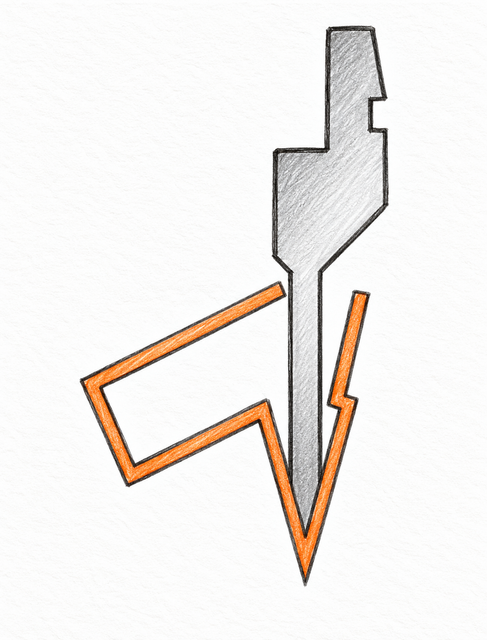
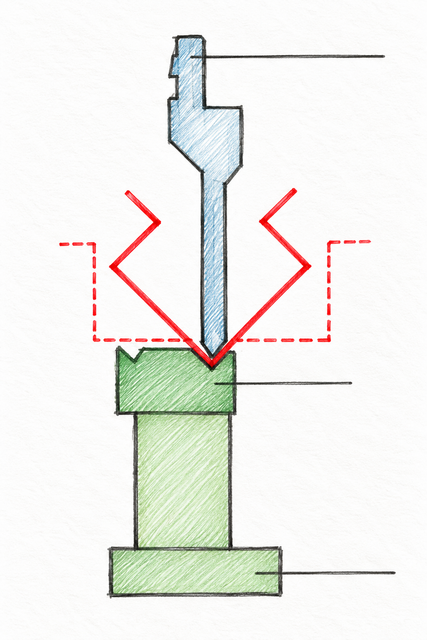
The reason this matters is simple. A job built on standard tools gets set up in minutes, because the operator just clamps the right punch and die and starts pressing. Every special tool adds lead time (often one to three weeks for a custom ground punch from a local toolmaker) and adds cost that gets spread across your order quantity. For a 50-piece batch, that tooling line can be bigger than the bending itself.
Designing for standard tooling
You don't need to be a press brake expert to design for standard tools. A few habits go a long way.
Pick a radius that matches what's on the shelf
For mild steel, an inside radius at or slightly above the material thickness is comfortable. Stainless and aluminium need more room, so go larger there rather than fighting the material.
Size the die to the thickness
For mild steel between about 1 and 3 mm, an 8V die works well. As thickness goes up, step to 10V or 12V. Going too tight (say, 6V on 3 mm plate) means more tonnage, more wear, and a higher risk of cracking on the outside of the bend.
Respect the minimum flange length
A common guideline is at least 4 times the thickness. Shorter flanges can't be properly held in the die, so the bend ends up wandering or the part gets scrapped. If you need a shorter flange, you're now in special-bend territory.
Keep holes away from bend lines
Hole-to-bend distance should be at least about 2.5 times the thickness plus the inside radius. Closer than that and the hole distorts during forming.
Add bend relief when a flange sits near an edge or corner
Without relief, the material tears or bulges at the corner. A small notch is cheap insurance.
Group bends by angle and radius
If every bend on a part is 90° with the same inside radius, the operator can run the whole job without swapping tools. Mixed angles and radii force tool changes, and those add time you'll pay for.
Be careful with hems and tight returns
A flat hem or a sharp 180° return needs a special tool in most shops. If the design can accept an open hem or a slightly larger return, you'll save real money.
Standard press brake tolerances in India
Tolerances depend on the machine, the backgauge, the material, and how experienced the operator is, so treat these as realistic shop-floor figures for a standard press brake job, not laser-cut precision. Always confirm with your fabrication partner before you lock a drawing.
- Bend angle: ±1° is typical. Tighter (±0.5°) is possible with angle measurement and correction, usually at a premium.
- Flange length (outside dimension): ±0.1 mm on flanges up to about 300 mm.
- Overall length between bends: ±0.1 mm on a single bend, but expect this to widen as you add bends.
- Cumulative tolerance across multiple bends: roughly ±0.5 mm over a 500 mm part. This is where most dimensional arguments start, so design datums carefully.
- Hole-to-bend distance: ±0.25 mm.
If the drawing doesn't specify a general tolerance, many Indian drawing offices reference ISO 2768 medium (the IS 2102 equivalent), and that's a sensible default for sheet metal too. Anything tighter than the figures above should be called out explicitly on the drawing, because it will affect both the process and the price.
Standard bend vs. special bend
This is the question that decides whether your part is quoted in hours or in weeks. The line isn't always sharp, but these distinctions hold up well in practice.
A normal (standard) bend usually has:
- An angle between roughly 30° and 135°, most often 90°
- An inside radius that matches a standard punch and a standard die opening available in the market for the thickness in use
- A flange long enough to be held in the die, typically at least 4 times the thickness or 0.707 times the V width of the die in use.
- Bend lines that clear the punch and die without interference
- No special features near the bend, such as hems, joggles, or closed channels
- The ability to be formed in a single setup with the tools already in the shop
A special bend usually involves one or more of:
- An acute angle below 30°, or an obtuse angle above 135°, which may need a dedicated punch or die
- A 0° hem, a teardrop hem, or a tight return that needs a specialised tool
- A joggle or offset, which needs a custom punch profile
- A flange shorter than the minimum, which needs a special holding fixture or a different die
- Bends in very thick plate that need larger dies than the shop normally carries
- Bends that clash with the machine frame or the part's own geometry, such as a closed box or a U-channel with narrow access, requiring a gooseneck, segmented tooling, or a sequence the operator has to work out by hand
- Very tight radii that need a sharp punch, which can crack the material
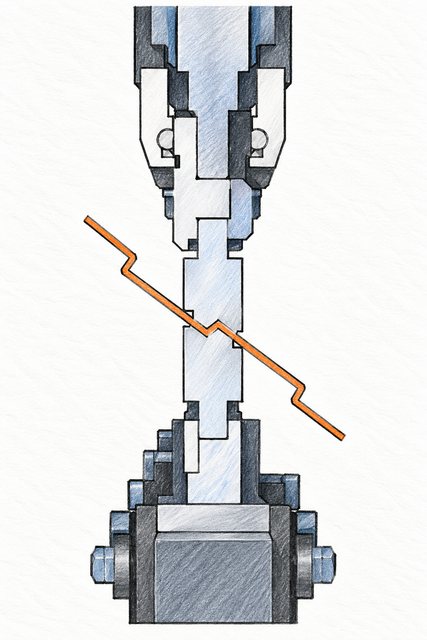

The practical difference is cost and time. A standard bend gets priced at the machine rate plus setup. A special bend adds tooling cost, longer lead time, and often a lower tolerance on the affected dimensions because the operator is working at the edge of what the tool can do.
If you're not sure which side of the line your part falls on, the fastest check is to ask your fabricator whether the bend sequence can run on their existing tooling. That one question tends to surface most of the surprises before they become a problem.
Where Tensor Cut fits in
On Tensor Cut, we do bending feasibility checks to flag these issues as soon as we quote. You can see which bends will run on standard tooling and which ones need a second look before you place the order. That way, you can make design changes while they're still cheap.
TensorCut's sheet metal bending service is based in Bangalore. We bend parts up to 3 m on CNC press brakes, cut and formed in one order.